


The Sopwith Watch Company and the immortal spirit of aviation legends
The golden age of British aviation has its epicenter in Kingston-upon-Thames, that Royal Borough in southwest London where pioneering spirit and engineering once met in a unique way. Here, the Sopwith Aviation Company wrote history – uncompromising, visionary, and ahead of its time.


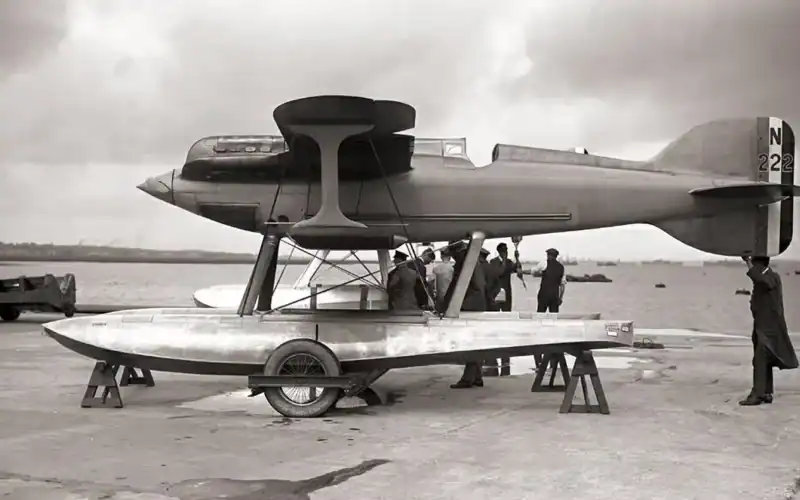
As early as 1914, Sopwith won the prestigious Schneider Trophy seaplane race – a triumph that redefined speed and innovation. Just three years later, the legendary Sopwith Camel appeared in the skies over the Western Front. More agile than its opponents and equipped with formidable firepower, this biplane with its 9-cylinder rotary engine became an iconic symbol of Allied air superiority and one of the most famous fighter aircraft of the First World War.
However, the ascent of the now-established aircraft manufacturer came to an abrupt end. In September 1920, massive tax demands from the British government forced the company into insolvency – one of the bitterest ironies in aviation history. The very nation whose survival Sopwith aircraft had helped secure sealed its economic fate. Decades later, however, a visionary would re-interpret this heritage – not in the air, but on the wrist.
Stephen Cox and the hunt for lost metal
Today, it is Stephen Cox who is bringing the Sopwith legacy back into the public consciousness. The well-known American racing driver, author, mountaineer, and TV host combines deep aviation expertise with a drive for adventure. Back in 1991, he secured the trademark rights to the Sopwith name and founded the Sopwith Motorsports Racing Team to save the former icon from oblivion.
Over decades, Cox traveled through fifteen countries on four continents, documenting former airfields and interviewing the last eyewitnesses of the great air battles. His private archive houses handwritten documents from nearly sixty WWI pilots, thousands of private photographs, and hours of original film footage.
Stephen Cox – Watch Enthusiast and Visionary

As a racing driver, Cox loves speed, but he also loves exclusive timepieces. His vision when founding the Sopwith Watch Company in 2022 was both radical and revolutionary: A Sopwith watch doesn’t just commemorate an aircraft – it is the aircraft. Every case is crafted entirely from salvaged steel of former machines. Authentic metal that once flew over the English Channel, the Arctic Sea, or the deserts of North Africa.
A Sopwith pilot watch doesn’t just remind you of a legendary aircraft – the watch is the aircraft.
Sopwith Watch Company
Masterpieces cast in shape with a past
At the Sopwith Foundry, established in 2024 in Houston, Texas, the past is cast into form. Cox personally acquires historical steel worldwide – often in small quantities. He follows strict rules: only material that is inaccessible or unsuitable for museum restoration and would otherwise be left to decay finds its way into the furnace.
Since wartime steel lacks a uniform structure, work in the foundry resembles metallurgical detective work. Every fragment is laboratory-analyzed, as an engine cylinder from 1918, for example, can contain up to seven different types of steel. To achieve the necessary hardness and skin compatibility, the metal is melted and refined to the AMS 5360 aviation standard.
A final PVD coating (Physical Vapor Deposition) of titanium carbide gives the case a Vickers hardness of 1,500 HV, protecting the historical metal without veiling its identity. Since this process is purely artisanal, each edition remains strictly limited – dictated by the physical finitude of the available material.
The Sopwith Foundry – Reshaping the legacy of flight

Modern pilot watches as witnesses to aviation history
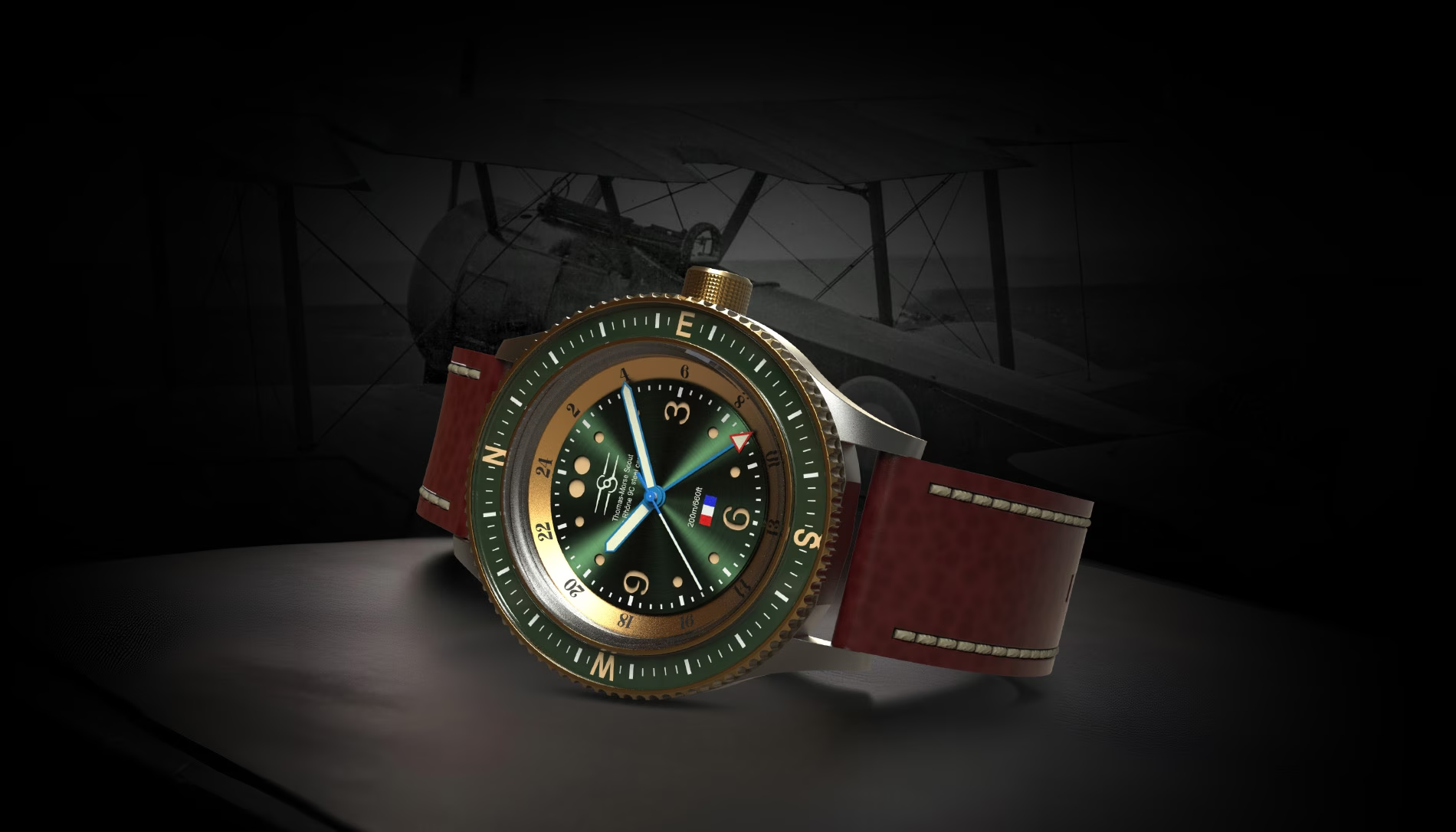
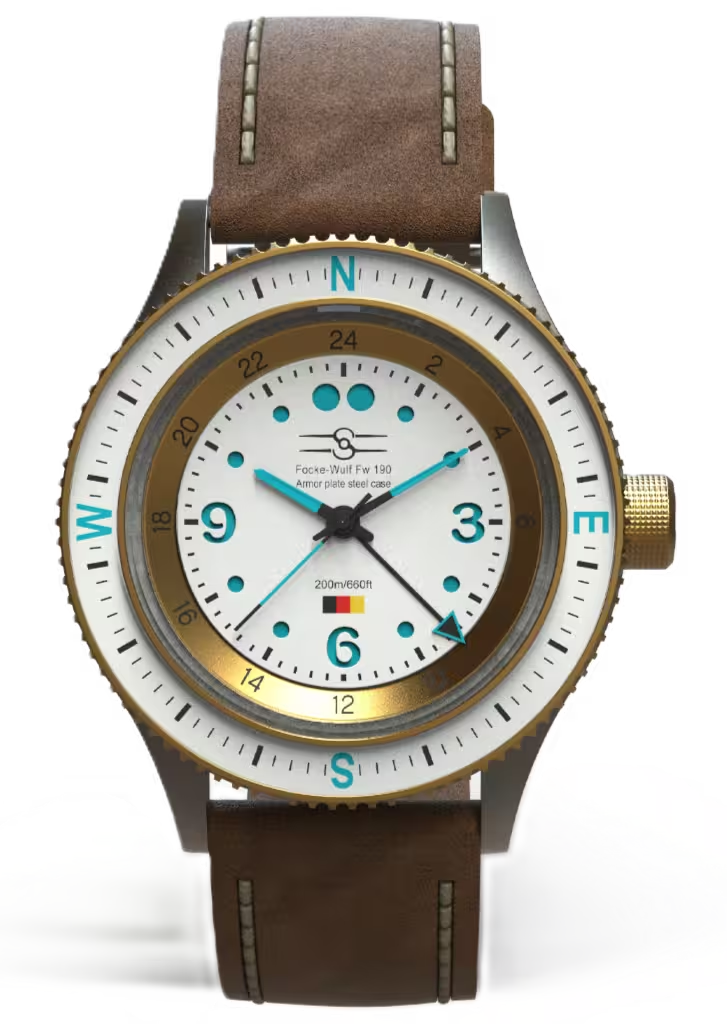
The technical soul of the current Sopwith flagship collection, the Aero Marquis, is consistently tailored to the requirements of a modern cockpit instrument. Beating inside is the Swiss Mecaline Specialties Calibre 2893-A2 Élaboré automatic movement by ETA, offering its proud owner a precise GMT function alongside a 42-hour power reserve. The cases withstand magnetic fields up to 20,000 Gauss and are water-resistant to 200 meters.
Every detail on the wrist cites history with functional clarity. For example, the hands are modeled after the needles of historical instrument panels. Whether crafted from the steel of a French Gnome engine or the original cockpit armor of a Messerschmitt Bf 109 or a Focke-Wulf Fw 190 – anyone wearing a Sopwith owns a small treasure, an authentic witness to aviation history.
Focke-Wulf Fw 190 Arctic Sea made from steel armor plate
At the Sopwith Watch Company, the quality promise doesn’t end at the counter; it only truly begins at the limit. With a lifetime guarantee on the stability and durability of its steel, the brand sets a monumental standard for uncompromising craftsmanship. That this is more than just a promise is proven by the toughest test verdicts in the world: those of the pilots themselves.
Whether it’s US aerobatic icon Skip Stewart, pushing his Pitts Special into breathtaking maneuvers, Greg Koontz in his Super Decathlon, or the Jack Aces Aerobatic Team in their iconic P-51 Mustangs – they all wear a Sopwith in the cockpit. Under the most extreme loads and real-world conditions, these timepieces prove their heritage anew every day. Sopwith is not just a tribute to history but – now as then – living proof of the unique symbiosis of pioneering spirit and engineering excellence.
Sopwith Watch Company – real aircraft for the wrist
More from Sopwith
More information at sopwithwatch.com