




Wings of Speed: How the Schneider Trophy shaped modern aviation
It was the golden age of speed: the Schneider Trophy transformed fragile flying machines into technological icons and laid the foundation for the pilot watches that we celebrate today as the epitome of functional reduction on our wrists. Anyone who wears a mechanical pilot watch today can feel the consequence of its design: the total subordination of form to function.


But this layout is not the result of modern design studios. It is the legacy of an era in which a reading error of one second decided between victory and disaster. The most radical test track of this era was not a paved airfield, but the open sea. The Schneider Trophy served as the most prestigious high-performance laboratory of the modern age and defined the pace of aviation and horology for an entire century.
The vision behind the obsession
It all began on 5 December 1912. French industrialist and aviation enthusiast Jacques Schneider donated a challenge cup for seaplanes. However, his motivation was not purely an obsession with speed in general. It was more than that: Schneider was convinced that the future of global travel lay on the water – because the oceans offer the most natural runways in the world. His goal was to promote and strengthen the technical development of the still young civil aviation industry. But in doing so, he also set in motion a technological race that would push the boundaries of mechanics in less than two decades.
Howard Pixton’s Sopwith Revolution
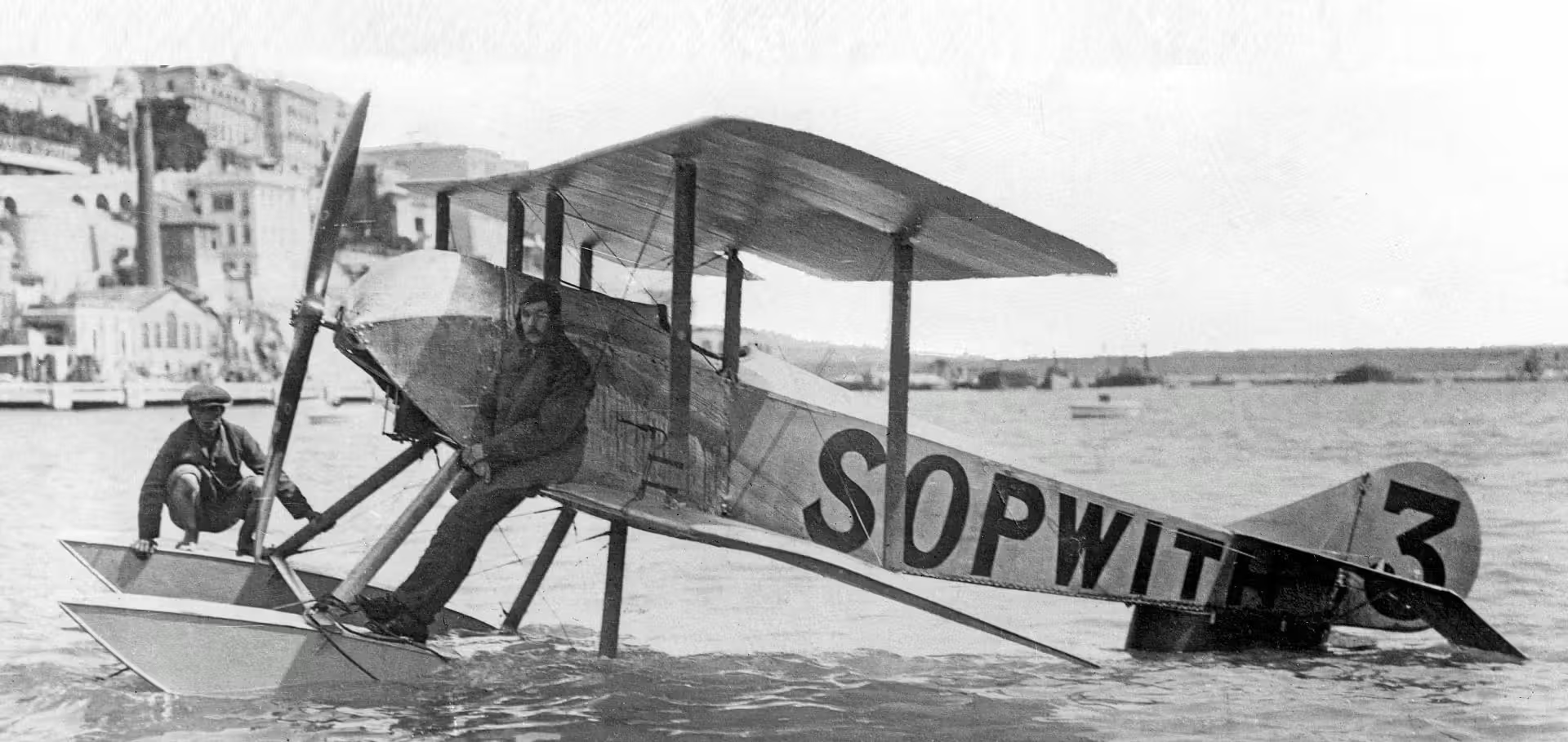
The decisive turning point came in Monaco in 1914. Until then, seaplanes had been considered slow and heavy machines. Then Howard Pixton appeared on the scene. As chief test pilot for the Sopwith Aviation Company, Pixton was much more than a fearless aviator. He was an aeronautical engineer who understood the synergy of weight and aerodynamics like few others of his time.
Pixton competes with his Sopwith Tabloid – a machine that radically breaks with all conventions. It is small, frighteningly agile, and consistently trimmed for efficiency. With an average speed of 139 kilometers per hour, which was astronomical by the standards of the time, Pixton outclassed the international field. His victory was a mechanical manifesto: he proved that it was not sheer mass, but aerodynamic sophistication and precise timing that dominated the airspace. Pixton’s success marked the birth of the modern racing aircraft and set the standard for everything that was to follow.
Howard Pixton and his legendary Sopwith Tabloid
The blue laboratory of the speedsters
The fact that this thrill of speed took place on and above the water was also a technical necessity. Since conventional landing gear would have collapsed under the weight of increasingly powerful engines on grass runways, only the sea offered enough space for these speedsters, whose landing speed was already higher than the maximum speed of earlier models.
In the 1920s, the Trophy became the scene of a national battle for prestige. Here, engineers perfected liquid-cooled V12 engines and integrated cooling systems directly into the wings to reduce air resistance, for example. Within a few years, speeds catapulted from a modest 100 to over 600 kilometers per hour. The open sea became the world’s toughest test track for machines that were generations ahead of their time.
A sculpture at the limit
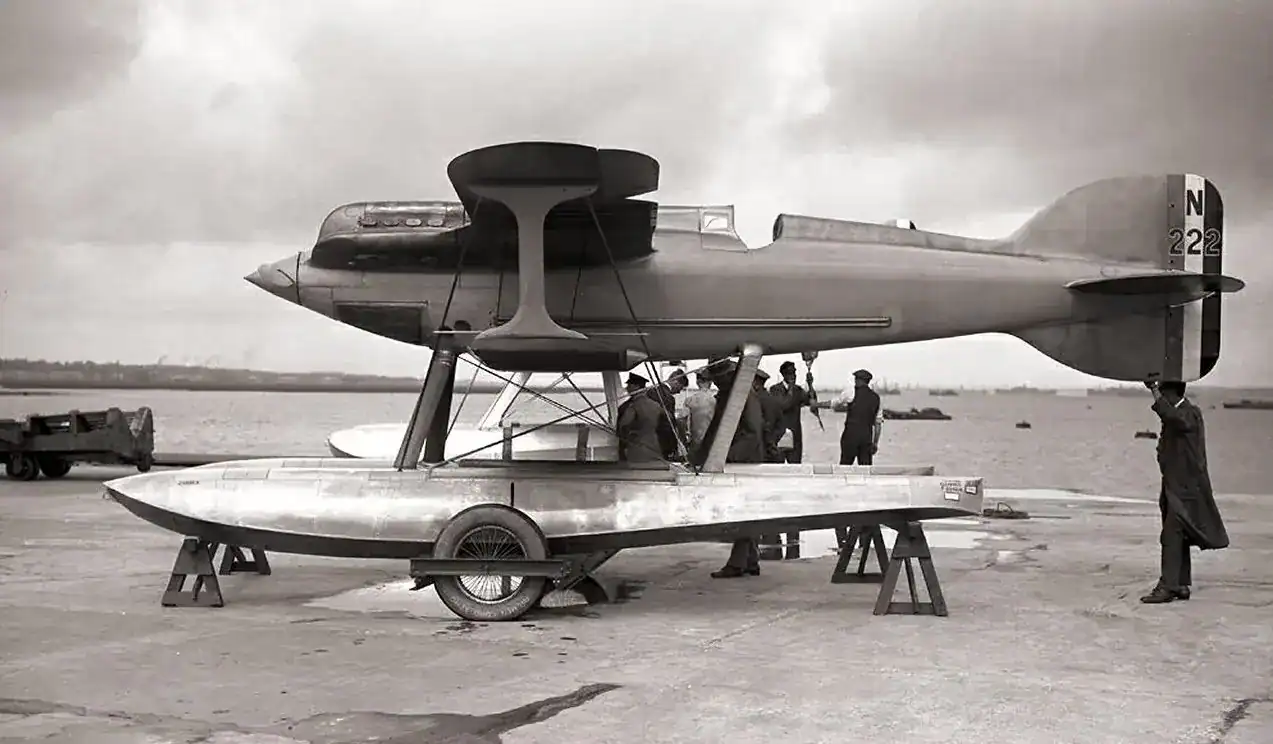
The culmination of this endeavor materialized in 1931 in the Supermarine S.6B. Its creator, the visionary British aeronautical engineer Reginald J. Mitchell, did not design a flying machine in the classical sense. He created a metal sculpture with a monstrous Rolls-Royce “R” engine roaring inside. Anyone looking at the striking blue silhouette of the S.6B today will immediately recognize the design essence of the later Spitfire fighter planes. Mitchell’s design followed the dictates of total reduction. There was no room for decoration in the narrow tube of the cockpit. Surrounded by deafening noise, the smell of burnt oil, and G-forces that exceeded human limits, only the absolute essentials survived.
The engine ran like clockwork, and only a glance at the instruments told me that I was shooting through the air at almost seven miles per minute.
Flight Lieutenant George Stainforth after his world record flight in 1931 in the S.6B
The birth of the tool watch
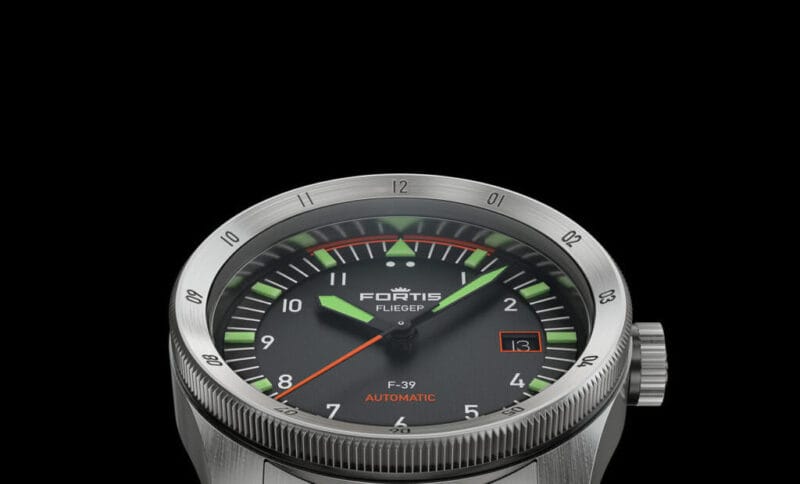
In these cockpits, time became the most crucial resource. At a speed of almost ten kilometers per minute, every second of deviation meant kilometer-long course errors. This is where the pilot’s watch as we know it today was born: as an instrument that had to withstand vibrations, heat, and aggressive sea breezes.
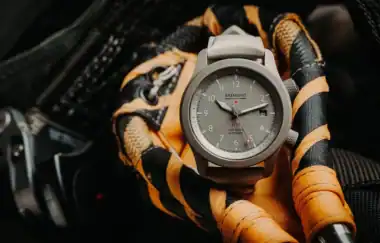
The requirements were clear: maximum readability and unconditional reliability. Large, high-contrast dials and distinctive hands became just as essential as oversized crowns for operation with leather gloves. It is the final transition from decorative wristwatch to professional navigation instrument – the real tool watch. When we look at our timepieces today, whose indices glow in the dark thanks to modern luminous material, we are wearing the legacy of the Schneider Trophy on our wrists.
A legacy of steel and vision
The Schneider Trophy officially ended in 1931, but its spirit lives on in every high-quality pilot’s watch. It is the fascination with mechanical limits and functional clarity that inspires us today more than ever. Whether it is the deep blue dial of a modern special edition or the robust case architecture of a contemporary tool watch, the origin lies in the spray above the sea. The Schneider Trophy taught us that true aesthetic perfection often arises where conditions are at their harshest. It remains the symbol of an era in which the time on your wrist not only set the pace, but also determined victory or disaster.
The legendary Schneider Trophy air races

The Schneider Trophy Officially known as the Coupe d’Aviation Maritime Jacques Schneider, the trophy evolved between 1913 and 1931 from a test run for civilian seaplanes to the most prestigious speed competition in the world. The rules were as unforgiving as they were groundbreaking: an aero club could only keep the silver challenge trophy permanently if it won three races over a triangular course of up to 350 kilometers within five years for its country. With its third consecutive victory in 1927, 1929, and 1931, Great Britain finally secured permanent possession of the cup, which can now be admired as a technical monument in the London Science Museum.
The legacy of the famous Sopwith Aviation Company
The Sopwith Watch Company and the enduring spirit of flying legends


